
Aug 2
founded Oct 7
established
founded Sep 29
dedicated Nov 15
in the NW
established
80% destroyed
Main St. consumed
of Idaho founded
in Census
Courthouse built
quartz mining
begins
reaches nadir: 104
ends
Foundation est.
listing
goes live
The Discovery — Gold in the Boise Basin
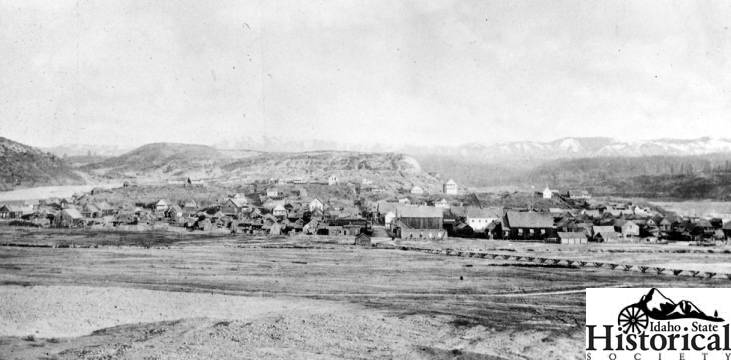
◈ Image source: Idaho State Archives - Idaho State Historical Society · Rights remain with original owner
Gold was discovered in the Boise Basin on August 2, 1862, by a party of prospectors led by George Grimes and Moses Splawn, who had followed an account from a Shoshone informant describing deposits abundant enough to be gathered by the handful. The party found placer gold along the creeks that would be named Mores Creek and Grimes Creek, approximately 25 miles northeast of present-day Boise, Idaho. Grimes was killed within days of the discovery — the accepted account attributes his death to a confrontation with Bannock or Shoshoni — and the creek was subsequently named in his honor. The full account of the discovery is documented by Boise County government and by the Idaho State Historical Society's reference series on gold in the Boise Basin.
The Boise Basin rush was the largest gold rush since the California Gold Rush of 1849 and the largest in American history during the Civil War era, as documented by Western Mining History. Individual placer claims in the fall of 1862 yielded an average of $18 per pan, with exceptional claims producing $80 per pan; a miner in a favorable location could take $2,000 in a single week, as recorded in the Idaho State Historical Society's Boise Basin publication. News of the strike spread rapidly across the continent. The Leavenworth Times of Kansas called the Boise Basin "the next El Dorado" in October 1863. A Dr. Lovejoy arrived in St. Joseph with 300 pounds of gold — worth approximately $82,000 at the time, equivalent to over $8.7 million today — as reported by KTVB.
The rush produced the largest population influx in the history of what is now the Pacific Northwest. Within eight months of the discovery, the Boise Basin held an estimated 25,000 people. The Idaho State Historical Society reference series on the Boise Basin site documents that the four major camps — Idaho City, Placerville, Centerville, and Pioneerville — constituted the four major mining communities in all of Washington Territory by the end of 1862. The entire area remained Washington Territory until President Abraham Lincoln signed legislation creating the Idaho Territory on March 4, 1863. That act of Congress was driven directly by the population surge the Boise Basin gold discovery had produced.
"A night scene in the Boise mines is as brilliant and magnificent as any similar spectacle to be met on the green earth. We counted more than thirty mining fires on Tuesday evening from a single standpoint."
Boise News, April 30, 1864 — via Western Mining HistoryFounding, Naming, and the Peak of Power
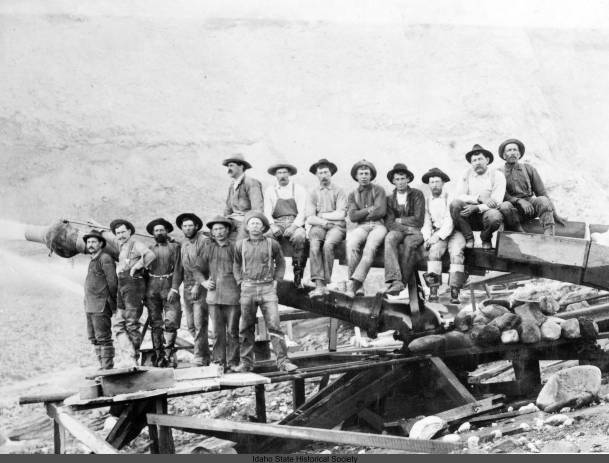
◈ Idaho City, Idaho - Image source: Idaho State Archives - Idaho State Historical Society · Rights remain with original owner
The town was officially founded on October 7, 1862, by J. Marion More, a member of the Splawn-Grimes discovery party, at a location near the confluence of Elk and Mores Creeks. Its plentiful water supply extended the viable placer mining season longer than competing camps, allowing Idaho City to surpass Placerville and all other Boise Basin settlements by summer 1863. The founding date and circumstances are documented by Legends of America and the Idaho City Historical Foundation's Basin of Gold account.
The settlement carried three names in rapid succession. It was called Bannock City at founding, renamed West Bannock in March 1863, and formally renamed Idaho City in December 1863 by the new Idaho Territorial Legislature to eliminate confusion with the mining town of Bannack in present-day Beaverhead County, Montana. The Idaho State Historical Society's Boise Basin reference series establishes this naming sequence and its territorial context. Boise County was officially established by the Idaho Territorial Legislature on February 4, 1864, with Idaho City as county seat, making it one of the Territory's seven original counties, as documented by Bryan D. Spellman's Boise County history and confirmed in the Boise County Wikipedia entry.
By September 1863, Idaho City's population had reached 6,275 — 360 women, 224 children, and the remainder miners and tradespeople — making it the largest city in the Pacific Northwest and surpassing Portland, Oregon, as documented by Boise County government. At peak in 1864, the city held 7,000 residents within its limits, with estimates of 25,000 to 70,000 across the surrounding Boise Basin, as recorded by the Idaho City Historical Foundation. Encyclopaedia Britannica records the regional peak population at 30,000 to 40,000.
At commercial peak the city contained more than 200 businesses, three dozen saloons, two dozen law offices, two schools, a lending library, five theaters, and a newspaper, as documented by Wikipedia's Idaho City article and corroborated by the Boise County GenWeb historical summary. The entertainment program included the Dan Rice Circus — the largest in the world at the time — and nationally prominent stage and opera performers who played the city's five theaters. Idaho City was, as the GenWeb summary states, one of the leading cities between Denver and the Pacific Coast. The city also held the first District Court term in March 1864, and the Yellow Pine Times documents the construction of the first jail — fourteen cells, costing $8,080 in gold dust — erected above Elk Creek north of the city center.
The Boise News, Idaho's oldest continuously published newspaper, was founded on September 29, 1863, by pioneer printers Joseph and Thomas Butler, subsequently renamed the Idaho World. Its full institutional history is maintained at idahoworld.com, and the Idaho State Historical Society's newspaper microfilm catalog places the founding date as September 29, 1863. The University of Montana holds the definitive academic treatment of the paper's history in the thesis by Ronnie R. Hayes, Idaho World: A Pioneer Chronicle of the Territory 1863–1918, submitted to the Graduate School at the University of Montana in 1982.
St. Joseph's Catholic Church was dedicated on November 15, 1863, as the first Catholic parish in the Idaho Territory and the first permanent Catholic church for European settlers in Idaho. Built on East Hill above the city center at a cost of three to four thousand dollars, it served a congregation composed largely of Irish Catholic miners. The Library of Congress Historic American Buildings Survey documentation confirms the dedication date and significance at loc.gov/item/id0022, and the full HABS data page is available at tile.loc.gov. The Diocese of Boise traces its institutional origin directly to this parish and the surrounding gold rush population, as documented at wikipedia.org/wiki/Diocese_of_Boise.
Four Fires — and the Town That Rebuilt Each Time
80% destroyed
in two hours
All of Main St.
$1M+ in losses
brick construction
accelerates
courthouse built
fireproof 1873
◈ Image source: Idaho State Archives - Idaho State Historical Society · Rights remain with original owner
Idaho City burned four times in its first decade. The first fire struck on May 18, 1865, and destroyed approximately 80 percent of the town's buildings within two hours, as documented by Diamond Lil's historical account. The second fire struck on May 17, 1867 — almost exactly two years to the day — consuming every building on both sides of Main Street and blocks beyond, destroying all hotels, the post office, the express office, and the principal business establishments, with total losses estimated above one million dollars. The Hook and Ladder Company responded to a report of flames in the roof of Cody's saloon; despite the effort of firefighters and citizens, the fire could not be stopped. The sequence is described in detail by the Yellow Pine Times historical series. Two further fires followed in 1868 and 1871. The Library of Congress HABS record for the Boise County Courthouse at loc.gov/item/id0032 documents that the courthouse was built fireproof specifically in response to these disasters.
Each time the town burned, it rebuilt with greater fire resistance. After the 1865 and 1867 fires, residents chose brick construction with iron shutters and earthen attic fill. The Boise County Courthouse, begun in July 1871 and completed three months later, represents the culmination of this approach. Its iron folding doors — each weighing half a ton — were manufactured in San Francisco, barged up the Columbia River, and carried overland by ox and horse teams to Idaho City. Three feet of packed earth filled the attic space. The full construction account is preserved by Boise County government and by the Society of Architectural Historians at sah-archipedia.org.
The post office built by Postmaster James Pinney in 29 days after the second fire at 503 Montgomery Street — now the Boise Basin Museum — is on the National Register of Historic Places, as confirmed by the Historical Marker Database at hmdb.org. St. Joseph's Catholic Church, destroyed in the second fire, was rebuilt by June 2, 1867, under the supervision of Father A.Z. Poulin. The rebuilt structure held the first recorded Solemn High Mass in Idaho on All Souls' Day, November 1, 1868, and hosted Idaho's first bishop, Bishop Lootens, in November 1869, as documented by the historical marker at hmdb.org/m.asp?m=119109. The Idaho City Masonic Temple on Wall Street, built in 1865 and surviving both the 1867 and subsequent fires, is documented as the oldest Masonic Hall west of the Mississippi River still in active use by SAH Archipedia. The Grand Lodge of Idaho was founded in Idaho City in 1867, as recorded by Boise County history.
The Boise Basin Mercantile at the northeast corner of Main and Commercial Streets consists of three separate buildings constructed in sequence in 1867, 1868, and 1869. Fire has not entered the structure since the brick construction of those years, making it the oldest continuously operating mercantile in Idaho — a claim maintained by Boise County government. SAH Archipedia documents that after more than a century, fifteen buildings from Idaho's pioneer gold rush era remain extant in Idaho City, representing the most intact concentration of 1860s mining-era architecture in the Pacific Northwest at sah-archipedia.org.
The Decline of Placer Mining and the Chinese Community
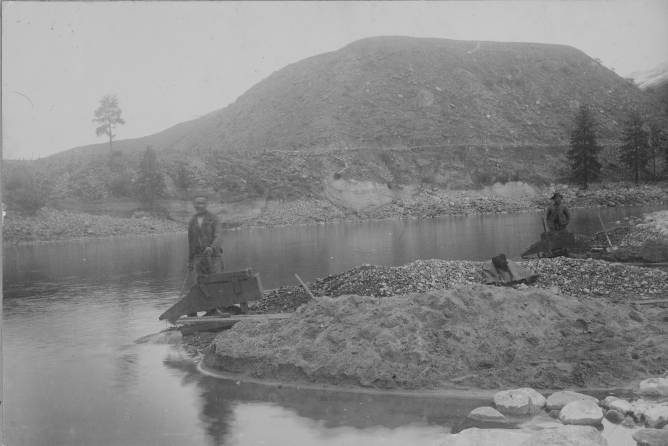
◈ Chinese mining community · Image source: Idaho State Archives - Idaho State Historical Society · Rights remain with original owner
The height of the boom lasted from 1863 to 1866. By 1867, the most productive placer gravels were exhausted and many Anglo miners sold their claims to Chinese miners, who were able through intensive labor to continue extracting gold from lower-grade deposits. The 1870 US Census recorded 1,700 Chinese residents in the Boise Basin, as noted by Boise County government. The Wikipedia article on the history of Chinese Americans in Idaho documents that by 1870, Chinese immigrants constituted a majority of the population in several Boise Basin mining communities, with 4,274 Chinese residents recorded across the Idaho Territory as a whole. Idaho City's Chinatown was substantial in its day — the Idaho City Historical Foundation's historical account notes a large Chinese population from 1864 through the early 1900s, though physical evidence of the Chinatown has largely been lost. The Pon Yam House at the corner of Montgomery Street and Commercial Streets, built in 1867, remains one of the few surviving structures associated with Idaho City's Chinese commercial district and is preserved today by the Idaho City Historical Foundation.
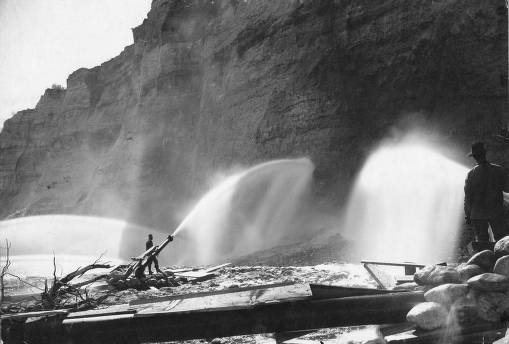
Idaho City's population fell below 900 by 1870, as documented by SAH Archipedia. The easily worked basin stream gravels had yielded most of their gold; miners shifted their attention to washing down higher bench placers with hydraulic equipment, building flumes and ditches running eight to ten miles in length to deliver water pressure sufficient to cut down hillsides. Quartz lode mining then sustained activity through the 1870s and 1880s with multiple stamp mills in operation, as recorded by Boise County GenWeb. The Gold Hill mine near Quartzburg, part of the larger Boise Basin lode system, remained productive until 1934, as documented by the Idaho State Historical Society's Boise Basin gold publication.
By 1920, Idaho City's population had reached its nadir of 104 residents. The Idaho City Historical Foundation's narrative frames the collapse plainly: with the gold rush over, the town had no major exports and no meaningful agriculture. Boise's population by 1920 had exceeded 20,000, sustained by the Treasure Valley's irrigation-fed farming economy. Idaho City's decline was not failure but physics — the gravity that had built it shifted to the valley when the gold ran out.
Dredge Mining and the Gold Production Record
◈
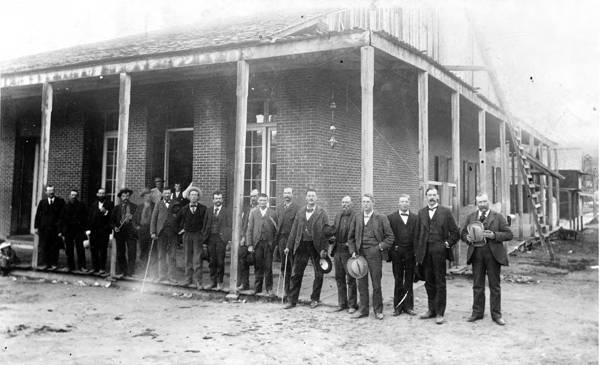
Dredge mining commenced in the Boise Basin in 1898 and continued through 1952, excepting a wartime shutdown from 1942 to 1946. The Idaho State Historical Society's Boise Basin reference series documents that by the close of all mining operations, over 3,000,000 ounces of gold had been extracted from the Boise Basin, approximately one-sixth from quartz mines and the remainder from placer and dredge operations. Western Mining History's county-level analysis places total Boise County gold production from 1863 through 1959 at 2,891,530 ounces, with 95 percent originating from the Boise Basin and the Idaho City camp alone accounting for approximately 2,300,000 ounces. The Wikipedia article on Boise County states that more gold was extracted from present-day Boise County than from the entire state of Alaska — a figure corroborated by the Rare Gold Nuggets analysis of Boise Basin production data.
The dredge operations left a physical mark on the landscape that remains visible today. Much of the lower-lying land in the Boise Basin was disfigured by dredging — the tailings piles of rounded river gravel that line the creek beds from Idaho City northward through Placerville and Centerville are the direct product of these operations. The Boise County GenWeb historical summary notes that entire camps like Buena Vista, located across Elk Creek from Idaho City, disappeared through dredging. The adjacent Quartzburg mining camp, which had survived the boom-bust cycle of the 1860s, burned in 1931 — the end of a settlement that had lasted nearly seventy years.
The Cumo Mining Project northwest of Idaho City represents the most recent significant lode mining activity in the Boise Basin, operating in the Quartzburg Mining District, as noted by Idaho Gold Mining. Small-scale placer mining continues across the basin today, with active claims documented by Western Mining History's current Idaho gold guide. The complete production history from 1863 through 1959 is the most thoroughly documented gold production record of any district in the Pacific Northwest.
Preservation, Institutions, and the Living Town
◈ Image source: Idaho STate Archives - Idaho State Historical Society · Rights remain with original owner
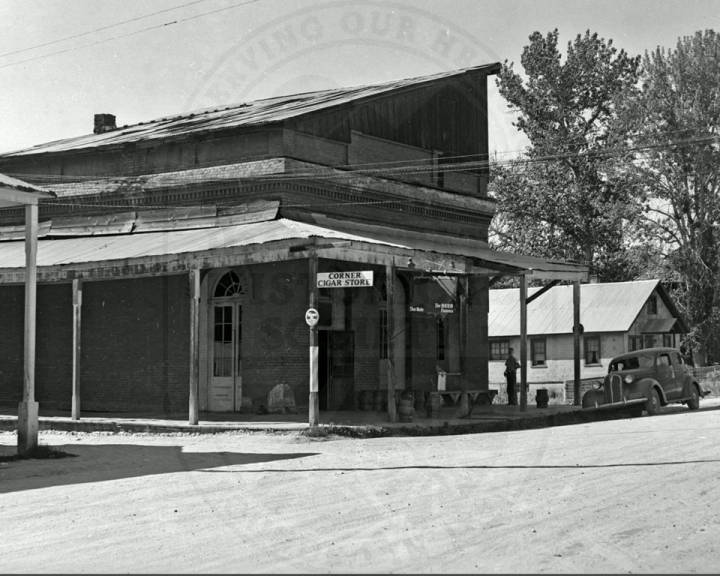
The Idaho City Historical Foundation was established in 1958 as a nonprofit 501(c)(3) dedicated to preserving, restoring, and interpreting the Boise Basin as a historical area. The Foundation maintains the Boise Basin Museum, the Pon Yam House, the Idaho Territorial Prison, two small historic residences, a fire pump station, the Pest House, a Blacksmith Shop display, the Strauss House and grounds, and the Idaho City Pioneer Cemetery, as detailed at mightycause.com. The Boise Basin Museum — housed in the 1867 post office building at 503 Montgomery Street — has operated under lease from the City of Idaho City since 1958, as documented by the Idaho Museums directory. In 2016, the Foundation received the Sister Alfreda Elsensohn Award — the highest honor awarded to a museum in Idaho — carrying a $10,000 prize from a pool contributed by the Idaho Humanities Council, the Idaho State Historical Society, and the Idaho Heritage Trust, as reported by the Idaho Senior Independent. The Idaho Heritage Trust maintains a record of the Foundation's work at idahoheritage trust.org.
Idaho City was placed on the National Register of Historic Places in 1975. The current NRHP listing for Idaho is maintained by the Idaho State Historic Preservation Office at the Idaho State Historical Society; the complete list as of December 30, 2024 is available at history.idaho.gov/wp-content/uploads/NRHP_Idaho.pdf. The Idaho State Historical Society's searchable index to territorial and state penitentiary inmates 1864–1947 — a primary source for the human record of the city's early legal history — is available at history.idaho.gov/searchable-indexes.
The Pioneer Cemetery contains over 2,000 burials representing the full demographic complexity of the gold rush era — Chinese settlers, Irish Catholic miners, Masonic lodge members, women, children, and the full spectrum of the frontier population that made Idaho City the largest city in the Pacific Northwest, as documented by United States Ghost Towns. The cemetery is maintained by the Idaho City Historical Foundation and remains an active research resource for genealogists working in the Idaho State Historical Society archives at history.idaho.gov.
The municipal government of Idaho City operates through the City of Idaho City official website at idahocity.municipalimpact.com, with the Mayor and City Council meeting in regular session at City Hall on the second and fourth Wednesday of each month at 6:00 PM under Ordinance 389. Boise County government — headquartered in the Boise County Courthouse in Idaho City, the county seat since February 4, 1864 — operates at boisecounty.us. Estimated 2025 county population is 8,545 per Wikipedia.
Idaho City's current population of 529 is growing faster than 79 percent of similarly sized American cities since 2000, according to Biggest US Cities. The city sits at elevation 3,986 feet, at coordinates 43°49′43″N 115°49′56″W, within the Boise City-Nampa Metropolitan Statistical Area, 36 miles northeast of Boise along the Ponderosa Pine Scenic Byway (Idaho State Highway 21). The byway runs 130.869 miles from Boise to Stanley, traversing the Idaho City Ranger District of the Boise National Forest, which encompasses just over 400,000 acres, as described at Visit Idaho and the USDA Forest Service Boise National Forest recreation page.
The Idaho World — founded as the Boise News on September 29, 1863 — remains Idaho's oldest continuously published newspaper, now available at idahoworld.com, serving Boise County communities including Horseshoe Bend, Garden Valley, Placerville, Lowman, Centerville, Crouch, and Idaho City. The paper holds all legal publications within Boise County, a responsibility it has maintained for over 160 years.
The Organizations That Hold the Record
Every Claim Has a Source
The following are the authoritative sources underpinning this record, typed in full. Each URL resolves to the exact source of the claims it supports.
The data infrastructure now exists to match that weight. 323 structured pages, 65,000+ weather records, every ordinance, every business, every census year — machine-readable and minted.
Explore the Full Record